

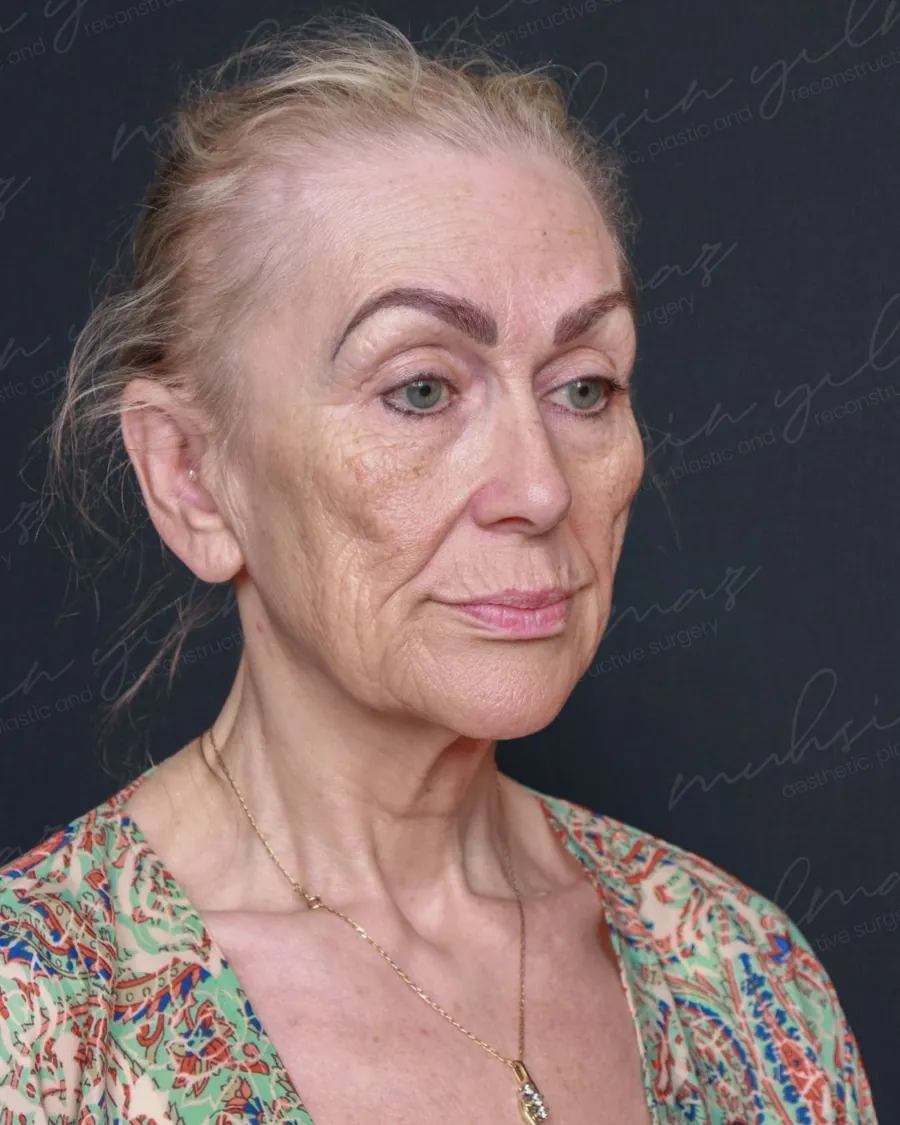
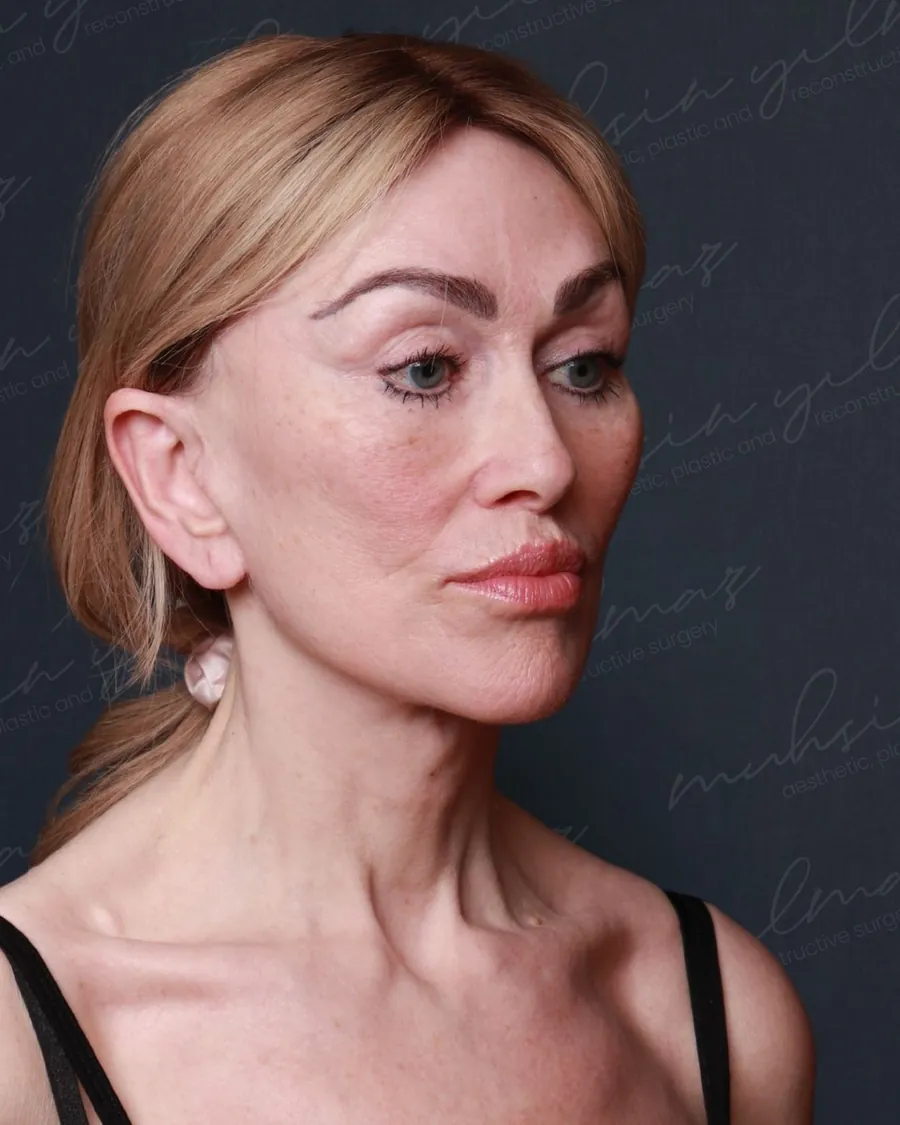
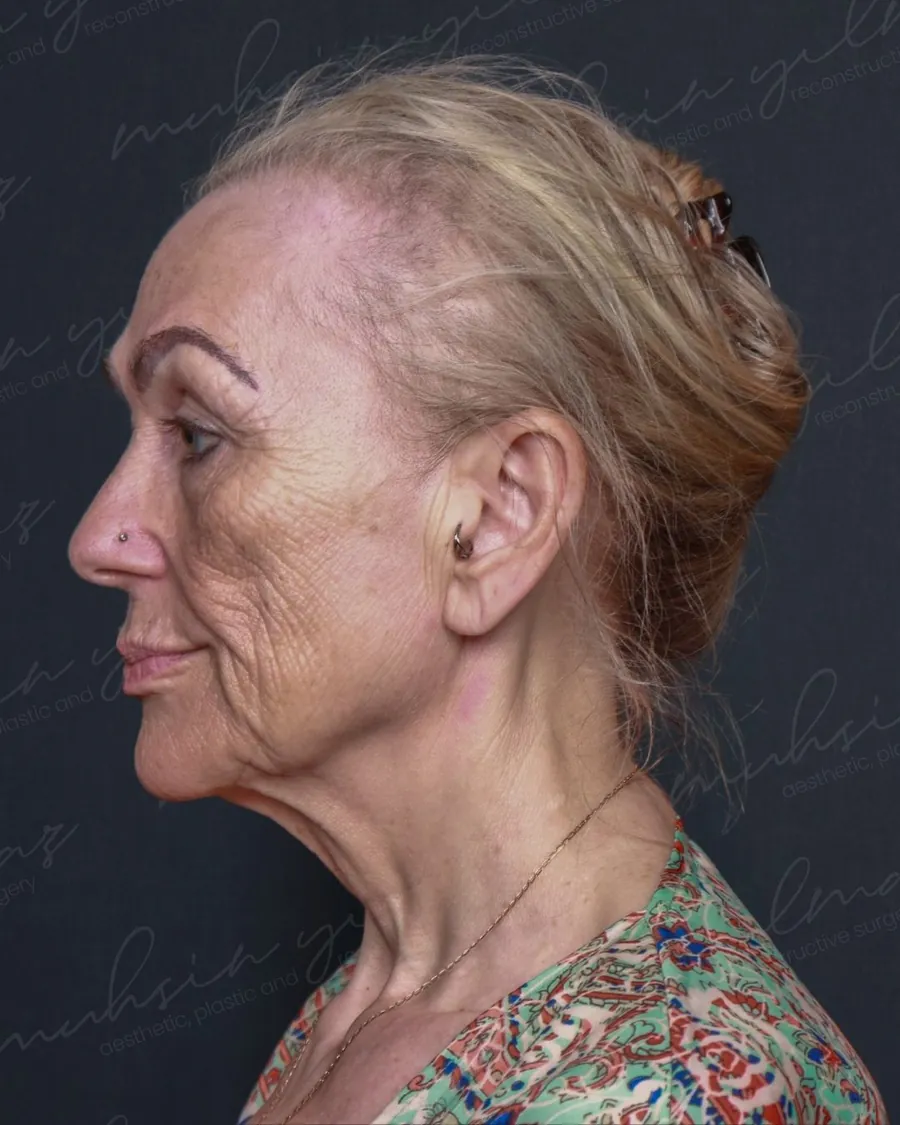

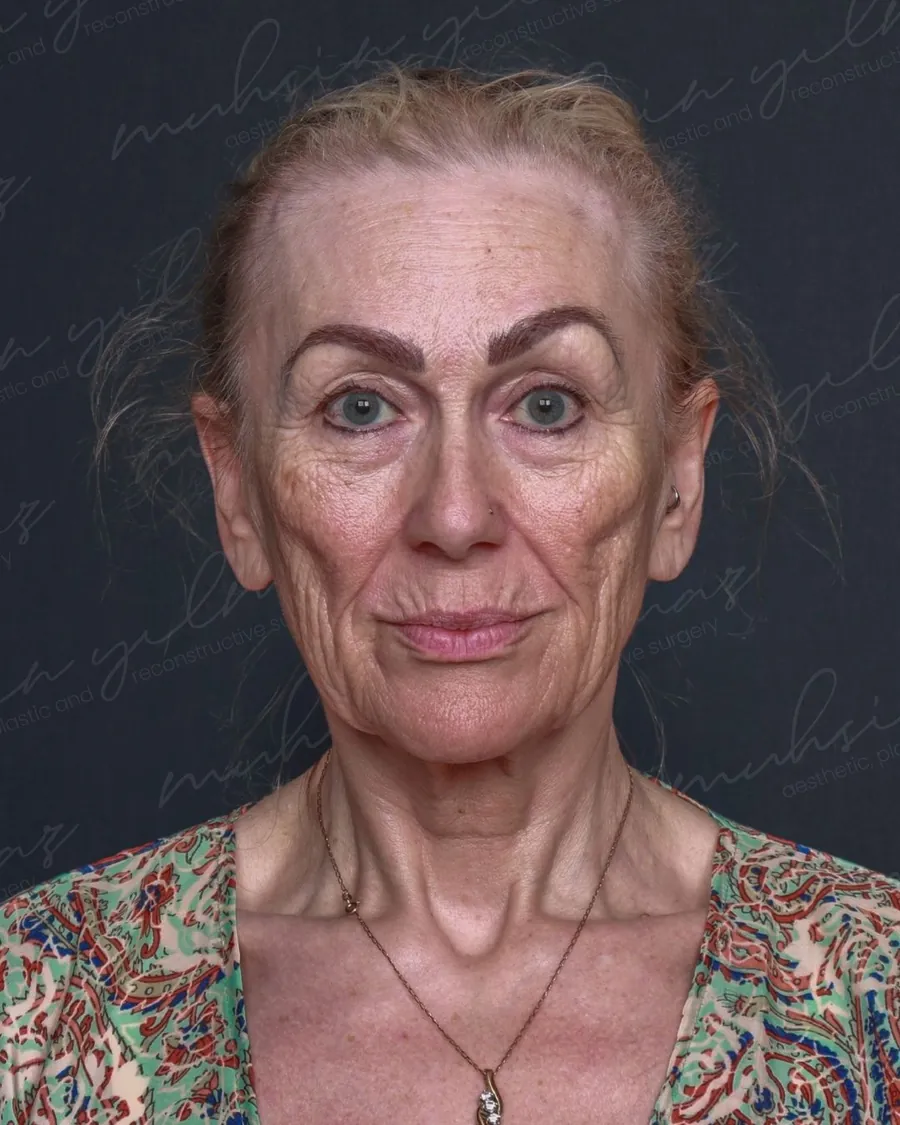

Case 01 — Woman, 56
Extended deep plane face & neck lift · Upper & lower blepharoplasty · Forehead lift · Temporal lift · Lip lift · Corner lip lift · Fat grafting · CO₂ laser




Case 01 — Woman, 56
Extended deep plane face & neck lift · Upper & lower blepharoplasty · Forehead lift · Temporal lift · Lip lift · Corner lip lift · Fat grafting · CO₂ laser
Unretouched. Published with written consent.
Indicative planning ranges. Your surgical plan, recovery and clearance to travel are individual.
A deep plane facelift releases the ligaments that tether the face and repositions the SMAS layer and the skin together, as one unit, instead of tightening the skin over a face that has dropped. It treats the descent that produces jowls and a heavier midface rather than the skin that shows it. Volume loss, skin quality and the neck are separate problems, and I treat them separately when they are part of yours.
Facial ageing is three things at once: position, volume and skin quality. A facelift corrects position. Where volume or skin need treating as well, I add fat transfer or resurfacing to the plan rather than asking the lift to do a job it cannot do — in my experience, asking one operation to do all three is how faces end up looking operated on.
Video Deep Plane Facelift: Explained
The right candidate has visible descent — jowls, a heavier midface, a softening jawline or neck — is in good general health, does not smoke, and understands that the result matures over months rather than days. Age on its own is not how I decide; anatomy, health and expectations are.
I advise against surgery for young patients whose concern is skin quality rather than descent, for anyone whose expectations surgery cannot meet, for patients with uncontrolled medical conditions, and for patients who cannot stop nicotine for the period safe surgery requires. If you are unsure which side of that line you are on, what I look for in your photographs is set out plainly.
The plan is decided by which structures have descended and how far, not by a menu. Your photographs guide my first recommendation; the plan is confirmed when I examine you in person and have reviewed your medical history.
An extended deep plane facelift carries the ligament release further, into the midface and along the jawline, so that heavier descent can be repositioned rather than stretched. In my practice it is nearly always combined with a deep neck lift, because the jawline and the neck age together and I assess them together; a lifted face over a neck that needed treating is a result I would not accept. For most of the patients I see, the neck is part of the plan from the start — how much of it needs treating is what varies.
“Lower deep plane facelift” is a term you will see used differently by different surgeons. In my hands it means confining the deep plane release to the jowls, the jawline and the neck when the midface still sits well — the same technique on a smaller territory, not a lesser operation. I would rather do less than lift a midface that did not need lifting, and I tell you which territory I propose to treat and why.
In my hands the operation follows the same order: incisions placed in the natural creases in front of the ear and into the hairline; the deep plane entered beneath the SMAS; the retaining ligaments released under direct vision; the deep layer repositioned and fixed where it should sit; and the skin redraped without tension and trimmed rather than pulled. What changes from patient to patient is the extent of the release and what is done to the neck.
Before you are asleep, the markings are drawn while you sit upright. After you are asleep, haemostasis is checked before anything is closed, and a drain and a hemostatic net are placed to reduce the chance of blood collecting under the flap — they lower that risk, they do not remove it, which is why you are monitored afterwards. What happens hour by hour, from the morning of surgery to your final check, is on your surgery timeline.
In the common SMAS techniques — plication and SMASectomy — the deep layer is tightened where it lies and the skin is handled as a separate layer. In a deep plane facelift the ligaments are released and the deep layer and skin move as one, so the closure carries almost no tension. Both are legitimate operations, and there are SMAS flap techniques that sit between the two. The difference I care about shows in the midface and in how the face moves.
| Aspect | Deep plane facelift | SMAS facelift (plication / SMASectomy) |
|---|---|---|
| What is lifted | SMAS and skin mobilised as one unit after ligament release | SMAS tightened in place; skin redraped as a separate layer |
| Dissection plane | Beneath the SMAS | Above or at the SMAS |
| Midface | Ligament release allows direct midface repositioning | Midface effect depends on the variant and its extent |
| Skin closure | Lift carried by the deep tissues; low skin tension | Support from the tightened SMAS; skin redraped separately to limit tension |
| What it asks of the surgeon | Detailed facial-nerve anatomy and experience in that plane | Generally a shorter dissection |
For milder laxity a SMAS technique can be the right operation, and I say so when it is. Where the midface has descended and the jowls are established, I prefer the extended deep plane. The complete comparison, including how I decide between the two in consultation, is on deep plane vs SMAS.
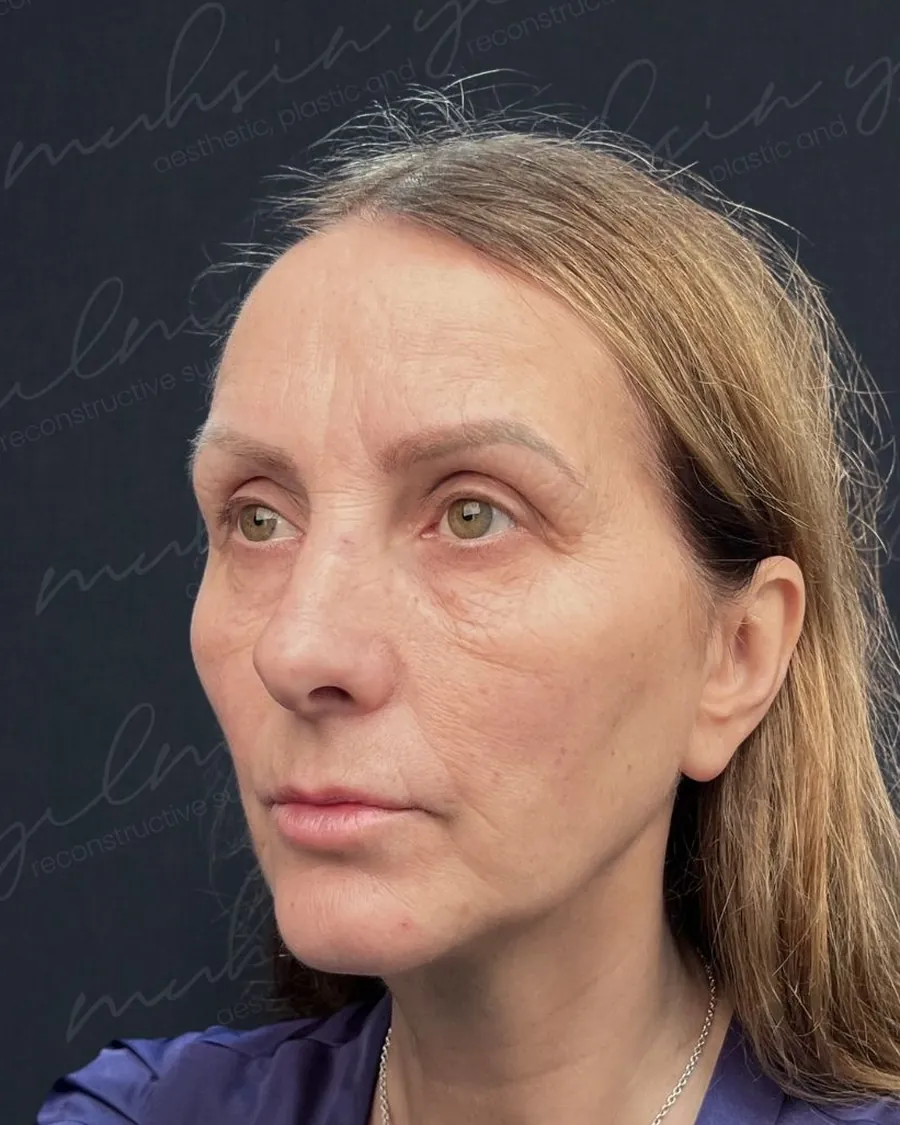
Every case below lists the full combination of procedures performed, so that you never mistake a combined result for a facelift alone. A photograph of combined surgery cannot separate what each procedure did, and I will not pretend it can; what it can show is whether the face still looks like the same person. The photographs are unretouched and published with written consent.
Extended deep plane face & neck lift · Upper & lower blepharoplasty · Forehead lift · Temporal lift · Lip lift · Corner lip lift · Fat grafting · CO₂ laser


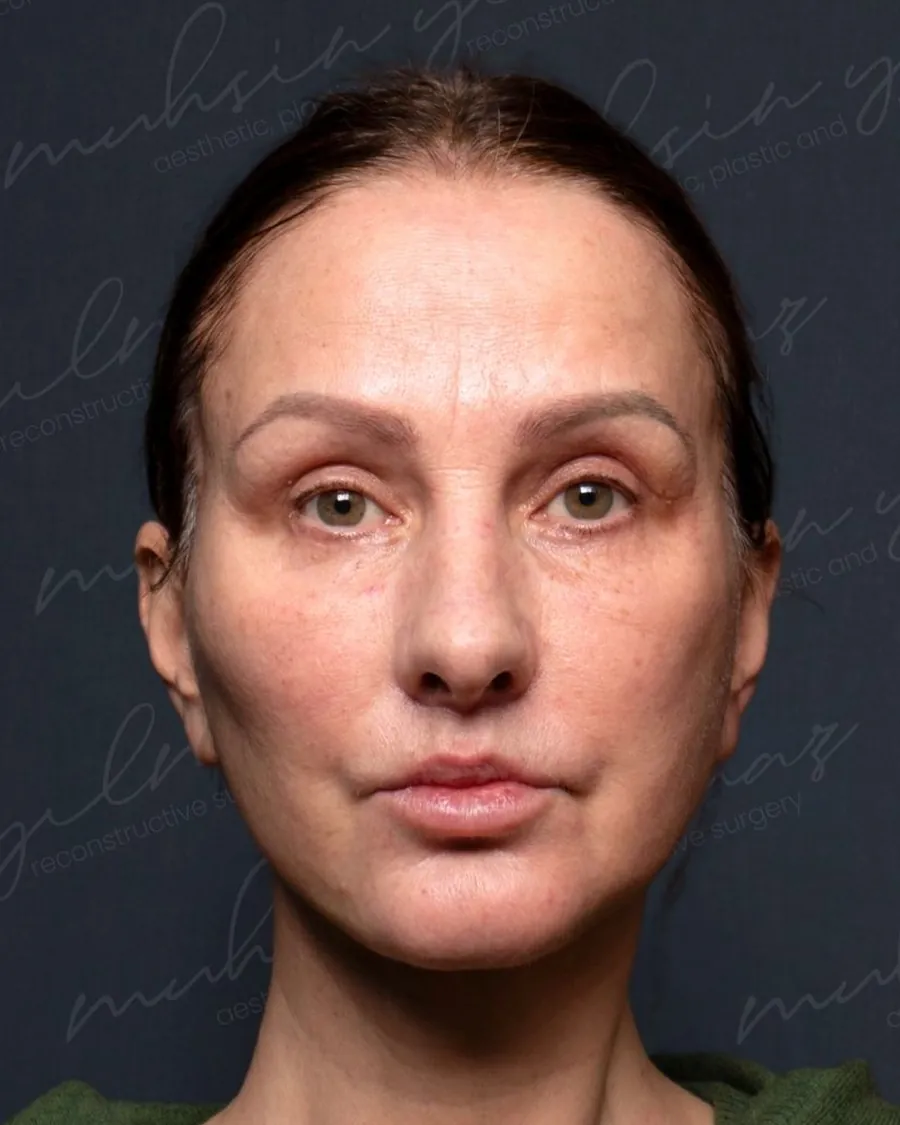

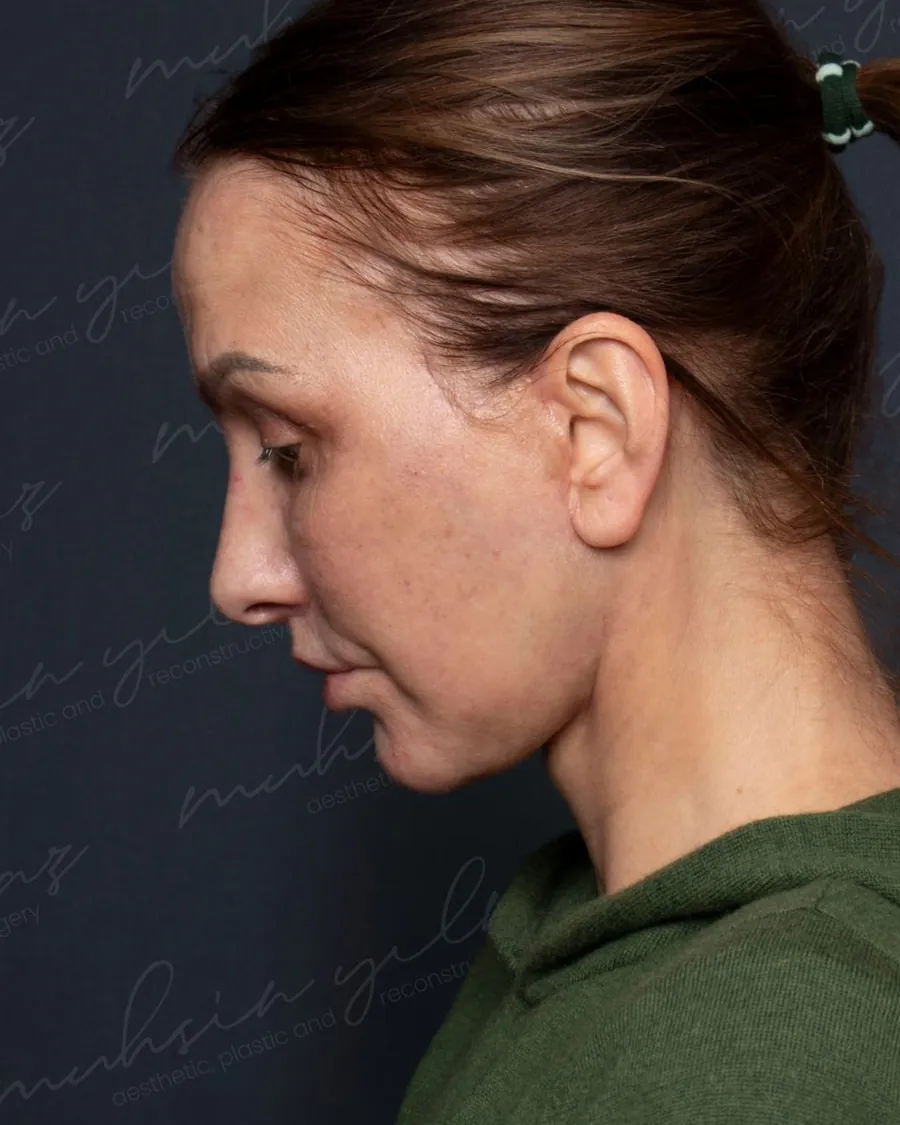
Extended deep plane face & neck lift · Upper & lower blepharoplasty · Canthopexy · Forehead lift · Temporal lift · Lip lift · Fat grafting
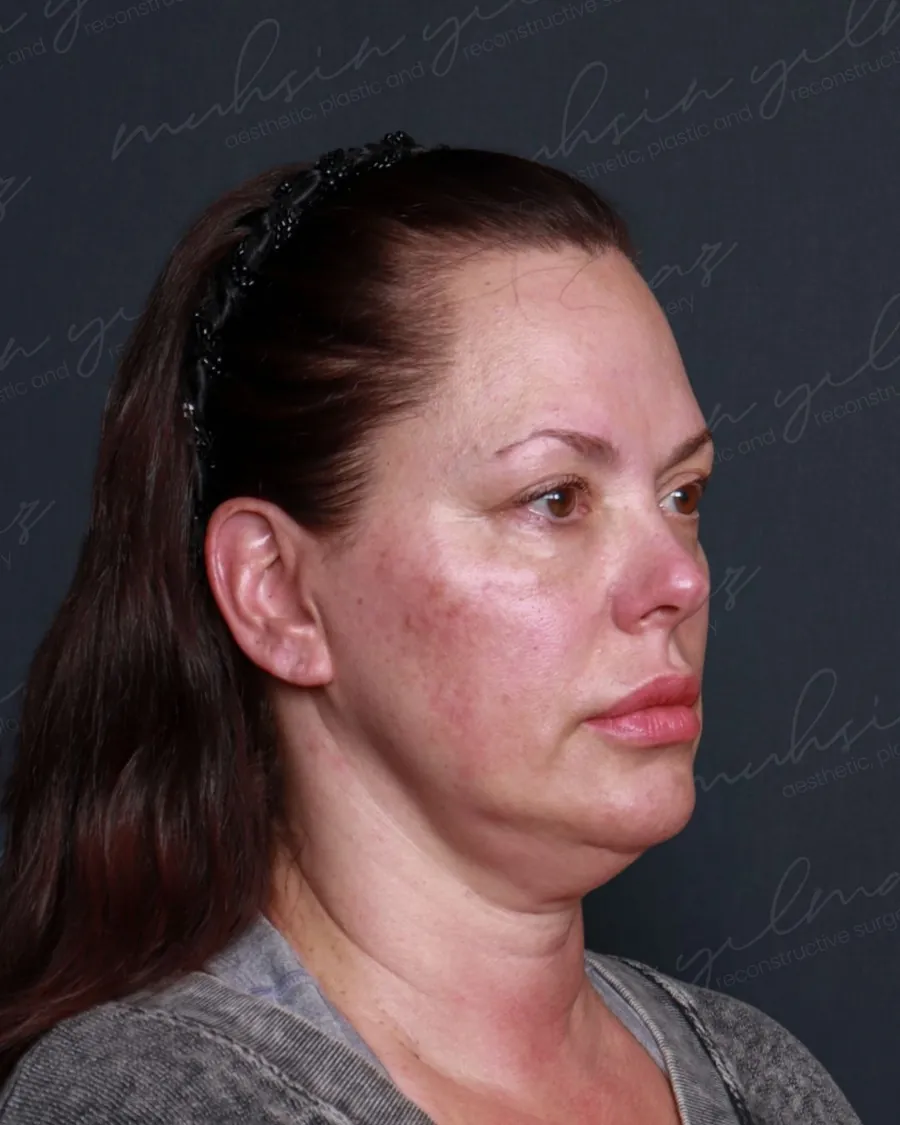
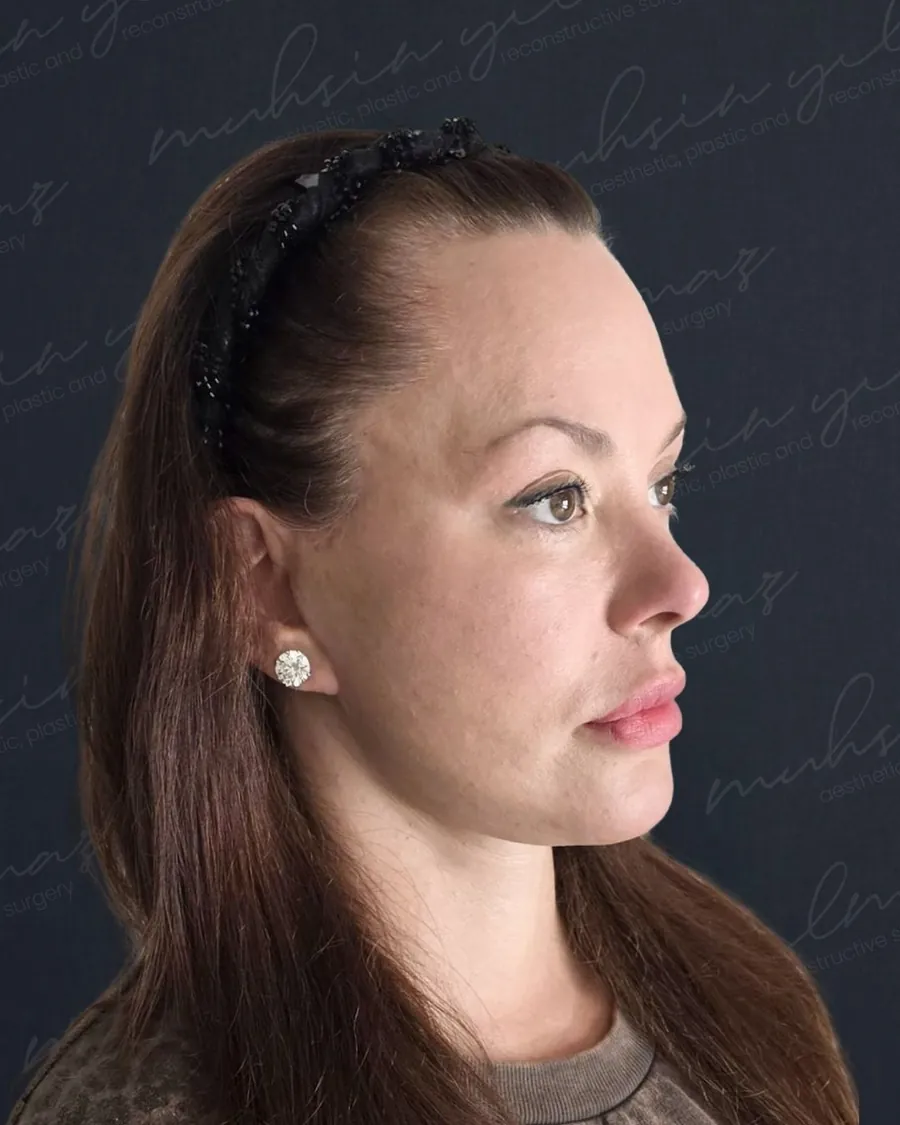

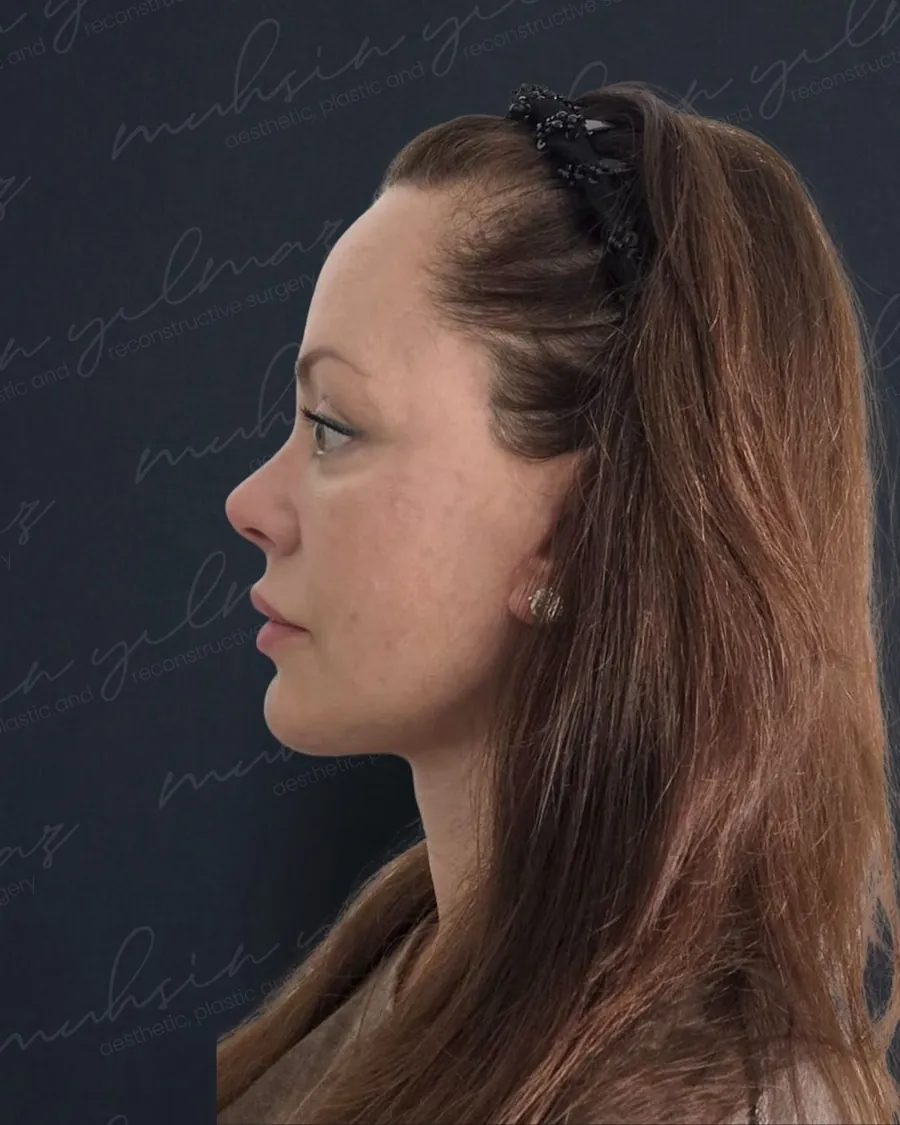


Extended deep plane facelift · Deep neck lift · Temporal lift · Endoscopic brow lift · Upper & lower blepharoplasty · Canthopexy · Fat grafting
What I want you to look at is the neck and the jawline. A lift that has moved the deep structures does not need to announce itself.
The facial nerve is the reason deep plane surgery demands more of the surgeon than a skin or SMAS lift, and protecting it is the centre of how I operate. I use an intraoperative nerve stimulator as standard in deep plane dissection to help me identify the nerve branches and check their response as I dissect, and I stay in the anatomical plane the technique was designed for. Careful dissection is the heart of nerve protection; it does not make nerve injury impossible, and I say so in consultation.
My background is the reason I am comfortable in that plane. I trained intensively in microsurgery and nerve surgery during my plastic surgery residency; my specialty thesis on nerve regeneration was supported by TÜBİTAK, the Scientific and Technological Research Council of Türkiye; and I am first author of a peer-reviewed study on peripheral nerve repair in Cell and Tissue Research. It is the background I bring to that plane, not a guarantee against the risks of facelift surgery.
Video How Do I Ensure Nerve Safety in Deep Plane Facelifts?
Surgery takes place at Acıbadem Kartal Hospital in Istanbul, a fully equipped hospital with intensive-care backup, under general anaesthesia given by a dedicated anaesthesia team — never in a clinic treatment room. In a long facial operation I treat perioperative safety as part of the technique, not as paperwork around it.
The depth of anaesthesia is monitored with BIS throughout; clot risk is reduced with compression stockings and pneumatic compression, chosen after your own risk has been assessed; your body temperature is actively maintained; antibiotics are given by protocol; and your blood pressure is controlled deliberately through and after the operation. Steady pressure, careful haemostasis and monitoring afterwards are how haematoma risk is kept low — none of them removes it. How to verify any hospital and any surgeon in Türkiye is covered on safety and standards.
Video Safety Measures I Take During Facelift Surgeries
A deep plane facelift is major surgery and carries real risks: haematoma and bleeding, which is the main early risk and the reason for close monitoring after surgery; infection; temporary weakness of a facial nerve branch and, rarely, permanent injury; delayed healing or skin circulation problems, markedly more common in smokers; visible or thickened scars; asymmetry; prolonged swelling; temporary numbness of the face and ears; and the risks of general anaesthesia and of clots.
Risk is individual, and it is discussed openly in consultation after I have reviewed your history, medications and nicotine exposure. The safety measures above exist to reduce several of these risks, not to abolish them — and if a complication does occur, how it is handled and what it costs you is written down before you travel.
The most frequent additions to a deep plane face and neck lift in my practice are upper and lower eyelid surgery, fat transfer to restore lost volume, an endoscopic brow lift or temporal lift, and CO₂ laser resurfacing for skin quality. Each addresses a component the lift does not: the lift corrects position, fat transfer restores volume, laser treats the surface.
There is no standard combination; the plan follows which of those components dominates in your face. How I weigh one longer operation against two shorter ones — operating time, recovery and your own risk — is on combined facial procedures.
In my patients, bruising is usually less than they expected — low tension on the skin and the hemostatic net both help — but swelling, tightness and altered sensation are part of every facelift recovery, and how long they last varies with what was done and how you heal. Most patients are socially presentable within a few weeks; the final result matures over the months that follow.
You stay in Istanbul until I have seen you at your clinic visits and confirmed at your final check that you are fit to fly — that decision is medical, not a date on a booking. Once you are home, follow-up continues by photograph and video call with me, and you have a direct line to the team that operated on you. What each week looks like, what is normal and what to report is in the facelift recovery guide; how the trip around it is arranged is on travelling to Istanbul.
A deep plane facelift does not stop ageing, and I do not promise a number of years. What it changes is your starting point: the deep structures are repositioned, and from then on you continue to age from a younger anatomical position than if you had not had the operation. The goal I set is that you look among the best of your own age group, and go on doing so as time passes.
Because the correction is structural, it does not depend on stretched skin holding — which is what gives way first in a skin-tightening lift. How a result changes over time differs from patient to patient, and I do not claim that any technique outlasts every alternative. The photographs above show individual outcomes; they are not a forecast of yours.
I do not publish a standard price, because there is no standard operation. The cost of a deep plane face and neck lift follows the surgical plan: whether the deep neck lift, eyelid surgery, fat transfer or laser are part of it, the operating time, and the hospital stay it requires. After your photographs are reviewed you receive an itemised quote for your own plan — the plan, not a label, is what defines the cost.
What a quote covers, what it does not, and how quotes from different clinics can be compared safely is on the cost page; deposits, dates and the revision policy are on the international patient FAQs.
If you are weighing facial surgery in Istanbul, four things should decide it: the surgeon's experience with this specific operation, the operation actually being proposed, the hospital you will be in, and who looks after you once you are home. Price belongs at the end of that list, not the start — and a plan agreed on your own photographs before anything is booked is the sign that you are being treated as a patient rather than a booking.
The whole journey, from your first message to the last photograph you send me, is on the patient journey.
It is a facelift performed in the plane beneath the SMAS, in which the facial retaining ligaments are released and the deep tissue and skin are repositioned together as one unit, so that the lift is carried by the deep layer rather than by tension on the skin.
In the common SMAS techniques the deep layer is tightened where it lies and the skin is handled separately; in a deep plane facelift the ligaments are released and the deep layer carries the lift. For established jowls and a descended midface I prefer the extended deep plane, because it lets me reposition the midface directly rather than pull on it. Other techniques can reach the midface too; for milder laxity a SMAS technique can be the right operation, and I say so when it is.
A structural correction does not depend on stretched skin holding, which is what gives way first in a skin-tightening lift. Ageing continues from a younger starting point, and how a result changes over time differs from patient to patient. I do not attach a number of years to that, and I do not claim that any technique outlasts every alternative.
The term is used differently by different surgeons. In my hands it means the same deep plane technique confined to the jowls, the jawline and the neck, for patients whose midface does not need lifting. It is not a lesser operation, and it is the right choice when a full extended lift would treat a problem you do not have.
It is a long operation. How long depends on whether the deep neck lift, eyelid surgery or fat transfer are part of the same plan, and I tell you the expected duration once your plan is defined. Length is not a sign of difficulty; it is the time the deep plane takes to do properly.
Neither question is the one I ask. I look for visible descent, good general health and realistic expectations. Younger patients with skin-quality concerns rather than descent are usually not facelift candidates yet; older patients in good health very often are.
The incisions run in the natural creases in front of the ear, behind the ear and into the hairline, and because the lift is carried by the deep tissue rather than the skin, they are closed under very little tension. That is one of the biggest factors in how facelift scars heal; where the incision is placed, your skin, nicotine and your own healing are the others. Scars fade over the months after surgery; they do not disappear, and I show you where they will be before you decide.
Not in my practice. I perform this operation under general anaesthesia in hospital, with a dedicated anaesthesia team and the depth of anaesthesia monitored throughout. Some surgeons offer deep plane surgery under local anaesthesia with sedation in selected patients; I do not, because of how long the operation takes and how close it runs to the facial nerve.
I do not publish a price, because there is no standard operation. After I have reviewed your photographs you receive an itemised quote for your own plan: the surgery proposed, what the quote includes and what it does not. How quotes are put together and how to compare them safely is on the cost page.
Names like that do not describe one operation. What is usually meant by a ponytail facelift is an endoscopic or limited-incision lift of the upper face, and I perform it where it is the right operation. Where the problem is the jowls and the neck, the name on the operation matters less than the plane it is performed in — and I explain both before you decide.
Start with photographs, not with a date. Send them over WhatsApp or through the form and you will receive my initial assessment of whether a deep plane face and neck lift is likely to suit you, a proposed plan, an expected length of stay and an itemised quote before anything is arranged. The final plan is confirmed when I examine you and have reviewed your medical history.
Request a personal review See before & after results
Every enquiry is reviewed personally by Dr. Yilmaz; scheduling is handled by the patient coordination team.
Written and medically reviewed by Muhsin Yilmaz, MD, FEBOPRAS — Plastic, Reconstructive and Aesthetic Surgeon. Last reviewed: September 2026.
Dr. Muhsin Yilmaz is a double board-certified plastic surgeon, holding the FEBOPRAS diploma of the European Board of Plastic, Reconstructive and Aesthetic Surgery and the certification of the Turkish Board of Plastic, Reconstructive and Aesthetic Surgery, and practises in Istanbul, Türkiye. His practice is focused on facial and neck rejuvenation, centred on the deep plane facelift — around 150 facelift operations per year, performed at Acıbadem Kartal Hospital. He is a member of TSPRAS and ISAPS, and is registered with the Turkish Ministry of Health for international health tourism. Read his full profile.