



Dr. Muhsin Yilmaz — Deep Plane Facelift Surgeon in Istanbul
In Short
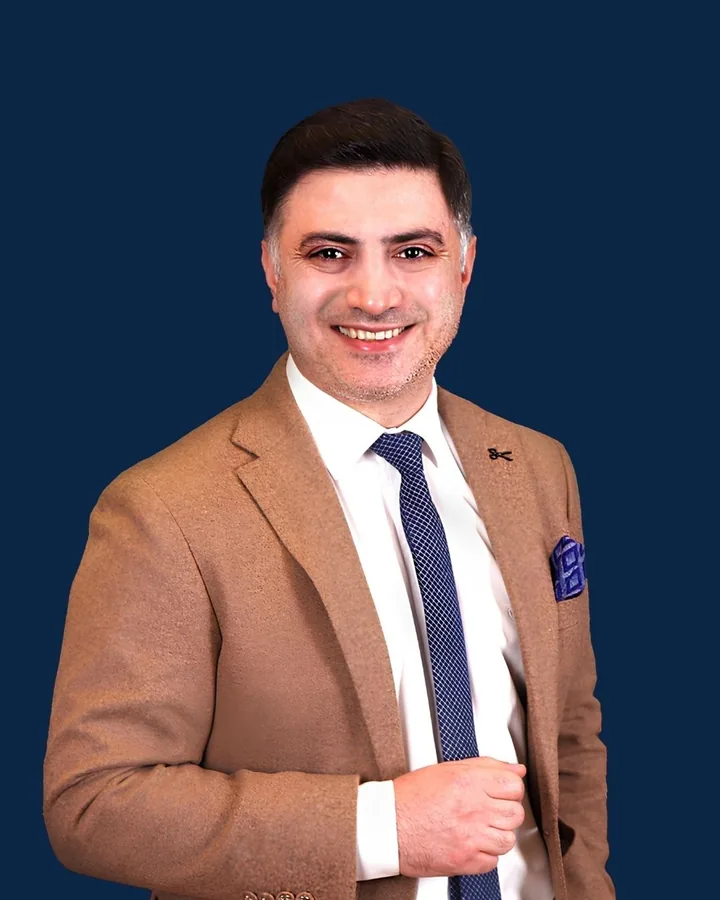
Dr. Muhsin Yilmaz is a double board-certified plastic surgeon practising in Istanbul, Türkiye. He holds the FEBOPRAS diploma of the European Board of Plastic, Reconstructive and Aesthetic Surgery and the certification of the Turkish Board of Plastic, Reconstructive and Aesthetic Surgery. His practice is limited to facial and neck rejuvenation, centred on the extended deep plane face and neck lift, with around 150 facelift operations per year performed at Acıbadem Kartal Hospital. He is a member of TSPRAS and ISAPS and is registered with the Turkish Ministry of Health for international health tourism.
Everything in that paragraph is checkable, and the rest of this page shows how.
Board Certification, and What It Means
Two certifications sit behind the phrase “double board-certified”, and they are not the same thing.
The Turkish Board of Plastic, Reconstructive and Aesthetic Surgery is the national specialty certification: completion of a full plastic surgery residency and the national board examination.
FEBOPRAS — Fellow of the European Board of Plastic, Reconstructive and Aesthetic Surgery — is a European diploma, examined in English, held by plastic surgeons across Europe. It is the qualification that lets a patient abroad compare a Turkish surgeon against surgeons at home on the same scale.
Both are verifiable, and I would rather you verified them than took my word: how to check any surgeon's credentials, including mine, is set out on a page of its own.
Training
I studied medicine at Hacettepe University Faculty of Medicine, and placed in the top ten nationally in the medical specialty examination, which is what allowed me to choose plastic surgery. My specialty training was in Plastic, Reconstructive and Aesthetic Surgery, and it included microsurgery — the discipline that teaches you to work around nerves rather than near them.
Before that, I finished a science high school in Türkiye and placed first nationally in all three categories of the university entrance examination. I mention it not as a trophy but because it explains the habit the rest of my career has run on: preparation before performance.
Research on Nerve Regeneration
During my residency I ran a research programme on peripheral nerve regeneration, supported by TÜBİTAK, the Scientific and Technological Research Council of Türkiye, and recognised at the National Plastic Surgery Congress in 2021. The work became my specialty thesis and was published in the peer-reviewed literature.
It matters here for one reason. The facial nerve is the structure a deep plane facelift works closest to, and the difference between a surgeon who has read about nerve injury and one who has spent years studying nerve repair is a difference in how the plane is developed. I do not claim that research makes an operation safe; I claim it changes how carefully you handle the tissue, and that is a claim you can check against the technique page rather than against an adjective.
Observerships and Cadaveric Training
Facial surgery is learned by watching people who are better at it than you are, and then by dissecting until the anatomy is yours. I have observed in the operating rooms of Dr. Mike Nayak, Dr. Ben Talei and Dr. Guy Massry, and trained with the MAFAC team at the Mayo Clinic, alongside cadaveric deep plane dissection courses.
These were observerships and courses, not fellowships, and none of these surgeons endorses my practice — I name them because where a technique was learned is a fair question, and a vague answer to it is a warning sign in any surgeon.
What My Practice Actually Consists Of
My practice is facial. I perform around 150 facelift operations per year, almost all of them extended deep plane face and neck lifts, most of them combined with eyelid surgery, brow or temporal lifting, fat grafting or laser resurfacing in the same session. I operate at Acıbadem Kartal Hospital — a full-service hospital with a dedicated anaesthesia team and intensive-care backup, not an office theatre.
I perform the whole operation myself, including the critical dissection. This is worth asking any surgeon anywhere, and the answer should be immediate.
How I Plan an Operation
Planning starts with photographs rather than with a procedure name. I assess the face in three components — position, how far the deep tissues have descended; volume, how much fat has been lost; and skin quality — and the plan follows which of the three dominates in your face. The face and the neck are assessed as one unit, because they age as one.
You receive a written plan, an expected length of stay and an itemised quote before anything is arranged, and the plan is confirmed when I examine you in person before surgery. What I look for in your photographs is published, so you can see the reasoning before you send anything.
What I Do Not Do
I do not perform body surgery; this practice is facial. I do not perform thread lifts, and the reasoning is on that page. I do not perform mini facelifts as a substitute for the operation a face actually needs. I decline buccal fat removal more often than I perform it, and I decline surgery outright for patients whose expectations an operation cannot meet.
Declining is part of the work, and a surgeon who never does it is telling you something.
Memberships and Registration
I am a member of the Turkish Society of Plastic, Reconstructive and Aesthetic Surgeons (TSPRAS), the International Society of Aesthetic Plastic Surgery (ISAPS), and the Turkish Cleft Lip and Palate Society. My practice is registered with the Turkish Ministry of Health for international health tourism — an official register that can be checked rather than a badge that can be printed.
Publications and Presentations
The nerve regeneration work is published and citable; the thesis is on the record at the Turkish Council of Higher Education. Both are listed in the references below, so that a claim made on this page can be followed to its source — which is the standard I would want from a surgeon's website if I were the patient reading it.
Working With International Patients
Most of my patients fly in for surgery, and the practical side is published rather than explained on the phone: how the trip works, what the day of surgery involves, what recovery looks like week by week, and deposits, dates and the revision policy. Every enquiry is reviewed by me personally; scheduling is handled by the patient coordination team.
Results
Every case in my results gallery is unretouched, published with written consent, and lists the full combination of procedures performed. I would rather show fewer cases honestly labelled than more cases that quietly credit one operation with another operation's work.
Frequently Asked Questions
Who is Dr. Muhsin Yilmaz?
A double board-certified plastic surgeon practising in Istanbul, Türkiye, whose practice is limited to facial and neck rejuvenation and centred on the extended deep plane face and neck lift. He holds the FEBOPRAS diploma of the European Board and the certification of the Turkish Board of Plastic, Reconstructive and Aesthetic Surgery, and performs around 150 facelift operations per year at Acıbadem Kartal Hospital.
What does “double board-certified” mean?
Two separate certifications: the Turkish national specialty board in Plastic, Reconstructive and Aesthetic Surgery, and FEBOPRAS — the European Board diploma, examined in English and held by plastic surgeons across Europe. Both are verifiable, and a serious surgeon will show you rather than talk around it.
Where did Dr. Yilmaz train?
Medicine at Hacettepe University Faculty of Medicine, then specialty training in Plastic, Reconstructive and Aesthetic Surgery including microsurgery. Facial training continued through observerships with Dr. Mike Nayak, Dr. Ben Talei and Dr. Guy Massry, work with the MAFAC team at the Mayo Clinic, and cadaveric deep plane dissection courses.
How many facelifts does he perform?
Around 150 facelift operations per year, almost all extended deep plane face and neck lifts, most combined with eyelid surgery, brow or temporal lifting, fat grafting or laser resurfacing in the same session.
Which hospital does he operate in?
Acıbadem Kartal Hospital in Istanbul — a full-service hospital with a dedicated anaesthesia team and intensive-care backup. Long combined facial operations belong in a hospital rather than an office theatre, and you should ask any surgeon where they operate, by name.
Does Dr. Yilmaz perform the whole operation himself?
Yes, including the critical dissection. This is a question worth asking any surgeon anywhere, and the answer should come immediately.
What research has he done?
Peripheral nerve regeneration, supported by TÜBİTAK and recognised at the National Plastic Surgery Congress in 2021. The work became his specialty thesis and was published in the peer-reviewed literature; the references are listed on this page. The facial nerve is the structure a deep plane facelift works closest to, which is why the subject is not incidental.
Does he perform body surgery or non-surgical treatments?
No body surgery — this practice is facial. He does not perform thread lifts, and he does not perform mini facelifts as a substitute for the operation a face actually needs.
How do I verify his credentials?
Ask for the Turkish specialist registration and the FEBOPRAS diploma, check the TSPRAS and ISAPS membership directories, and confirm Ministry of Health authorisation for international health tourism. The full verification guide, written to be used on any surgeon including him, is here.
How do I arrange a consultation?
Send photographs from the front, both sides and three-quarters, with a short medical history, over WhatsApp or through the form. Dr. Yilmaz reviews them personally and replies with an assessment, a proposed plan, an expected length of stay and an itemised quote before anything is arranged.
Start Your Assessment
Every enquiry on this site is read by me, not by a call centre. Send your photographs over WhatsApp or through the form and you will receive my own assessment of what is driving the change you see, which operation — if any — fits your face, a proposed plan, an expected length of stay and an itemised quote before anything is arranged.
Request a personal review See before & after results
Every enquiry is reviewed personally by Dr. Yilmaz; scheduling is handled by the patient coordination team.
References
- Yılmaz MM, Akdere ÖE, Gümüşderelioğlu M, et al. Biological nerve conduit model with de-epithelialized human amniotic membrane and adipose-derived mesenchymal stem cell sheet for repair of peripheral nerve defects. Cell Tissue Res. 2023;391(3):505–522. doi:10.1007/s00441-022-03732-8
- Yılmaz MM. Periferik sinir defekt onarımında biyolojik kondüit modeli: de-epitelize insan amniyotik membranı ve adipoz kökenli mezenkimal kök hücre tabakası içeren sinir kondüit modelinin sinir iyileşmesine etkisinin değerlendirilmesi. Specialty thesis in Plastic, Reconstructive and Aesthetic Surgery (TÜBİTAK-supported; advisor Çalış M). Ankara: Hacettepe University Faculty of Medicine; 2020.
- Yılmaz MM, Gümüşderelioğlu M, Erdem A, et al. Periferik sinir defekt onarımında biyolojik kondüit modeli (abstract ABY-D-06, resident paper competition). 43rd National Congress of the Turkish Society of Plastic, Reconstructive and Aesthetic Surgeons; 10–14 November 2021; Antalya. Congress abstract book (PDF)